
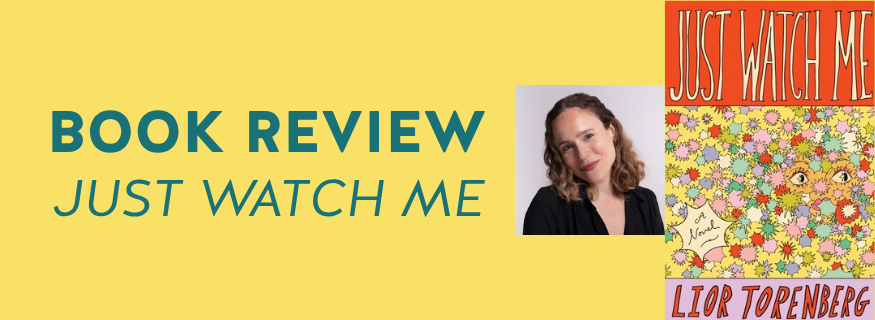
Lighthouser Lior Torenberg's debut novel, Just Watch Me, was released in December 2019. The book is “A one-of-a-kind debut. . . The ultimate it-girl book of the year” according to Cosmopolitan. Just Watch Me follows Dell Danvers, who is going through the wringer in this story that has been described as "Fleabag meets Big Swiss."
We're incredibly proud of Lior on her debut! Lighthouse faulty member Erika Krouse shared, "I was entranced by the fire-hot, take-no-prisoners Dell as she led me through a hypnotizing world full of bad behavior and self-destruction. Torenberg tells this story as no one else can, with searing prose and impeccable comic timing. Just Watch Me lives up to its title—I dare you to look away."
Let's check in with Book Project Lighthouser, Jenny Catlin, to see her review of Just Watch Me.
Jenny's Book Review
Lior Torenberg is not Dell Danvers, but she understands the world Dell is trying to survive. Maybe we all do.
Torenberg’s debut novel, Just Watch Me, centers on the internet’s appetite for performance. It felt fitting that we met over video: on screen, she was understated, without the extra polish her book anatomizes. Dell, meanwhile, is broke in the kind of New York apartment that only makes sense if you know what a legal one costs. She needs $14,000 fast. So she does what a particular kind of desperation has made legible: she turns herself into content.
Dell launches a livestream marathon and feeds herself to the internet, trying to stay visible long enough to stay afloat. The premise hints at satire or another “screens are ruining us” sermon. Torenberg sidesteps both. She treats the internet as infrastructure, which makes visibility feel like labor, not lifestyle.
The novel tracks what that knowledge costs. Dell keeps the channel alive: producing, managing, calibrating, performing. Self-commodification can feel like autonomy when the alternatives are wage labor, humiliation, and bosses you can’t block.
Torenberg pushed back on “algorithmic indifference”: social media, she said, is “one medieval town square,” and the algorithm rewards what our amygdala lights up for: “extremes. Danger, duress, depression.” She also noted how quickly feeling becomes template: “If you’re crying, the first instinct is to pull out your phone and start recording.”
Dell isn’t a moral lesson. She’s funny, volatile, strategic, and capable of narrating herself into corners. Torenberg doesn’t rank degradations so much as show how people survive them, and sometimes mistake self-exploitation for freedom.
One of the book’s slyest moves is implicating the reader. The pacing doesn’t just accelerate; it seduces. You start wanting the next beat the way a feed trains you to want it: more, now, worse.
Meet the Author
Jenny Catlin has seen much success as a Pushcart Prize winner, a notable mention for Best American Essays, and as a writer for The Athletic, The Gettysburg Review, Willow Springs, and Horror-Sleaze-Trash, among other publications. As an educator, she has taught incarcerated people, college freshmen, and adults with intellectual disabilities. Jenny has ghostwritten thousands of pages of bureaucratic policy documents.